

DTF Color Accuracy Starts Here
CMYK chart for DTF printing – press it, pick your color, and submit the code. Order your Printed CMYK color chart today.
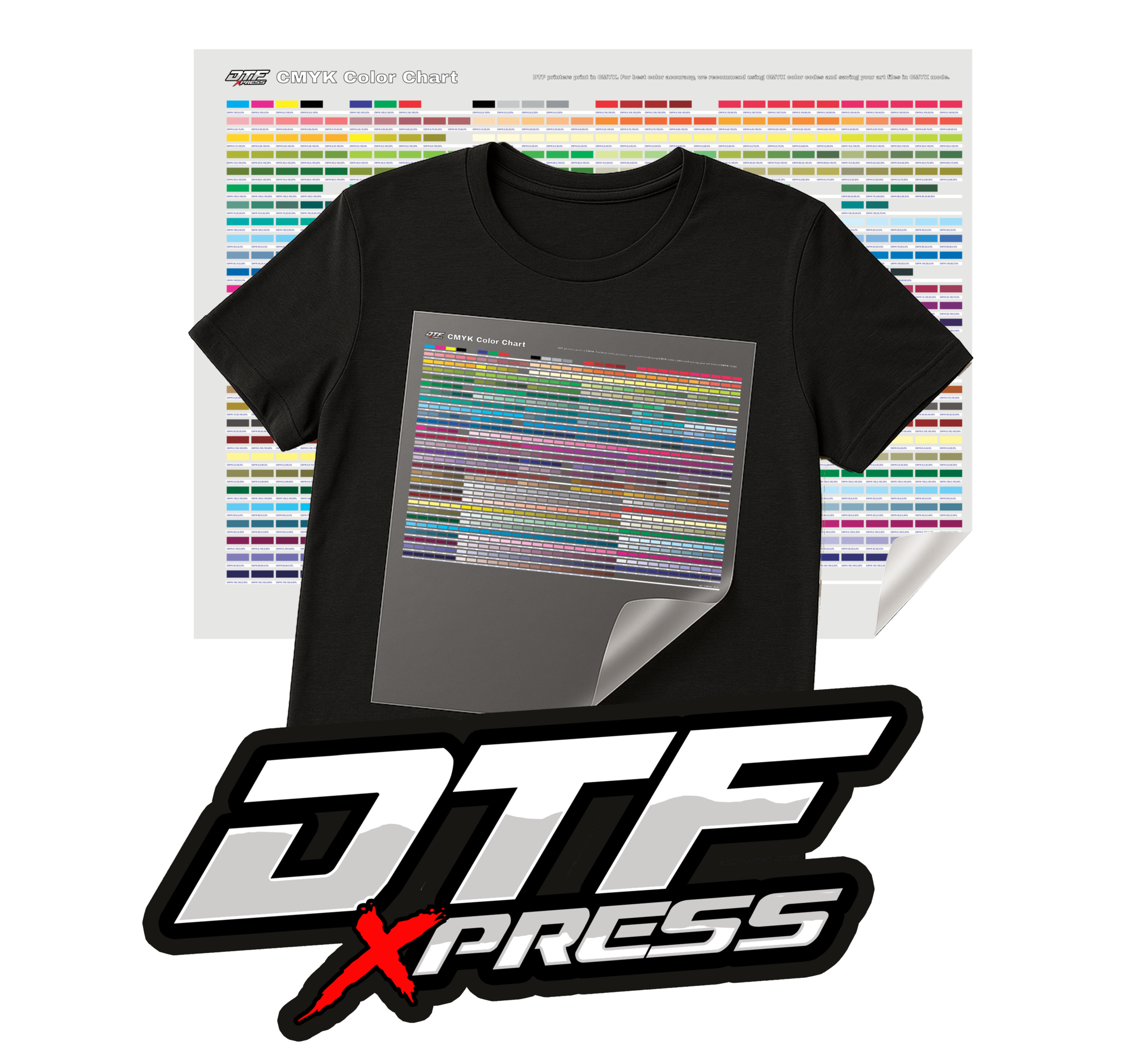
 Order Printed CMYK Color Chart
Need a color chart to press? We'll ship it to you.
Free – standard UPS rates apply.
 Order Printed Color Chart
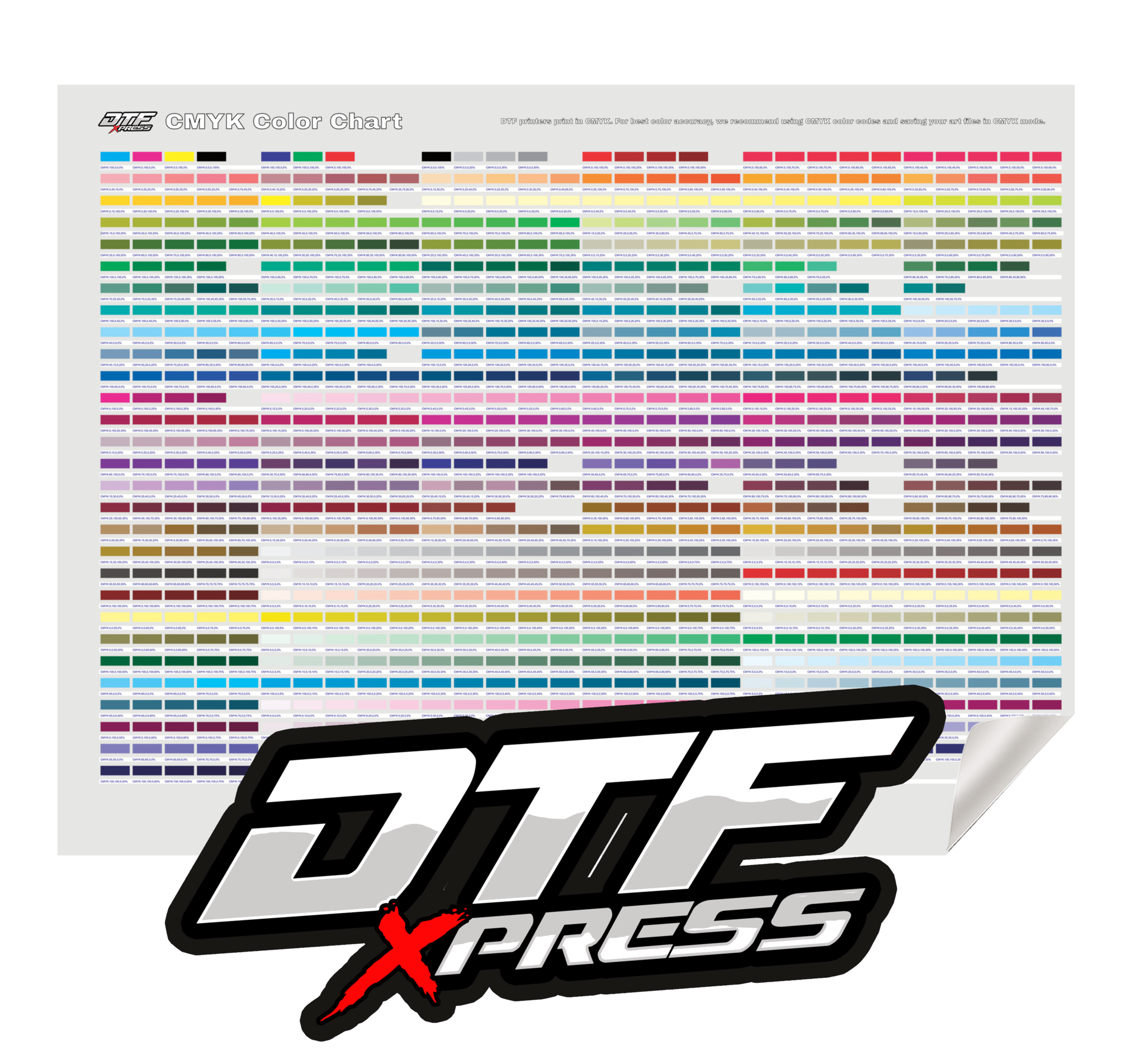
DTF Color Chart Sample Pack
Order our sample pack to receive a printed CMYK color chart for precise matching with your DTF transfers.
How to Use the Color Chart
- Unpack Your Chart: Open the envelope and review your printed CMYK color chart.
- Pre-Press Your Garment: Place your blank shirt on the heat press and pre-press it for 5 seconds to eliminate moisture and wrinkles.
- Position the Chart: Lay the chart onto the shirt, film side down and color side up.
- Press the Chart: Use the following settings: 300 °F for 10 seconds with medium pressure. Adjust slightly depending on the garment type.
- Peel Carefully: Let the garment cool and then peel the film slowly. For best results, cold peel after cooling completely.
- Repress to Seal: Place a Teflon sheet or parchment paper over the design and repress for 10 seconds to lock in the colors.
- Review Under Daylight: Examine the pressed swatches under daylight (~5000K) for most accurate results.
- Apply Color Code to Your Design: Identify the best-matching swatch on the chart and note the CMYK code. Enter this code into your design software (like Photoshop or Illustrator), and make sure your file is set to CMYK color mode, 300 DPI resolution, and a proper canvas size for your print. This ensures the colors you see and choose align with what will be printed.
Why Use Our Printed Chart?
- Accurate CMYK swatches under real pressing conditions.
- Eliminates RGB-to-CMYK guesswork seen on monitors.
- Reduces wasted transfers and ensures consistent color output.
- Vital for matching brand colors, gradients, and subtle tones.
Best Practices
- Design your artwork in CMYK using Photoshop, Illustrator, or equivalent.
- Submit files in PDF, AI, or EPS format to preserve color fidelity.
- Inspect the pressed chart under daylight or ~5000 K lighting.
- Reprint the chart if you change ink, film, printer, or press settings—even slight adjustments can shift output.
Quick Summary
| Step | Description | Why It Matters |
|---|---|---|
| Sample Pack | Pre‑printed CMYK color chart | Reflects actual output using your setup |
| Press Chart | Apply to shirt using 300 °F, 10 s, medium pressure | Mimics production conditions accurately |
| Match Color | Select closest swatch to your design | Determines accurate CMYK values |
| Submit File | Upload PDF with embedded CMYK profile | Ensures consistent final product color |
Frequently Asked Questions
Why does my print look different than my screen?
Screens display color in RGB (Red, Green, Blue), while DTF printing uses CMYK (Cyan, Magenta, Yellow, Black). Colors may appear more vibrant on a screen than they do when printed. The printed color chart gives a real-world reference to avoid surprises.
Can I print my own color chart?
You technically can, but it must be printed with your exact ink, printer, film, and press combo. Any variation in those elements can affect the results. Our chart is professionally calibrated and eliminates guesswork.
When should I order or reprint a color chart?
Due to natural shifts in ink, film, and supply batches, we can't guarantee that color output stays consistent forever. While we do our best to maintain consistency on our end, we recommend refreshing your in-store color chart every 60 to 90 days to ensure your customers always receive the most accurate results possible. It's a simple way to stay ahead and maintain quality.
What file type should I upload for best print results?
Submit your artwork as a PDF, AI, or EPS file with an embedded CMYK profile. Use 300 DPI for resolution, outline all fonts, and flatten effects. RGB images can lead to color shifts—always convert them first.
Do I need to press the chart on the same fabric I print on?
Yes. Different fabrics absorb ink and react to heat differently. For the most accurate color match, always press your chart onto the same type of garment you plan to use for production.
What lighting is best for evaluating the chart?
Natural daylight (around 5000K) is ideal for assessing color accuracy. Avoid warm/yellow or cool/blue indoor lighting, as they can distort color perception.
